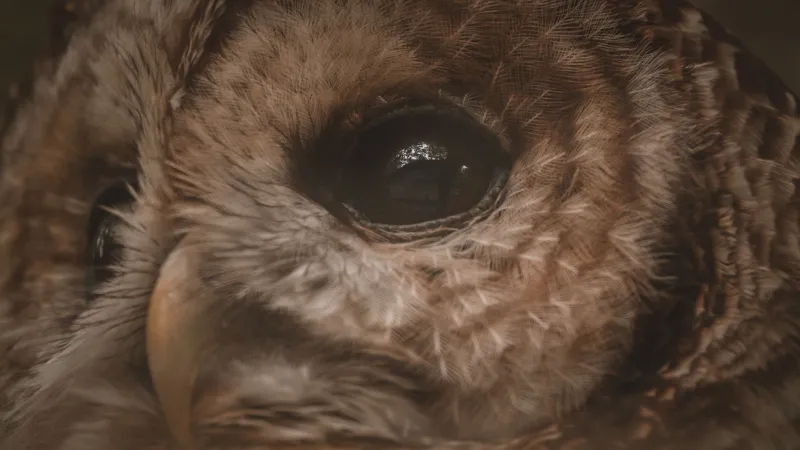
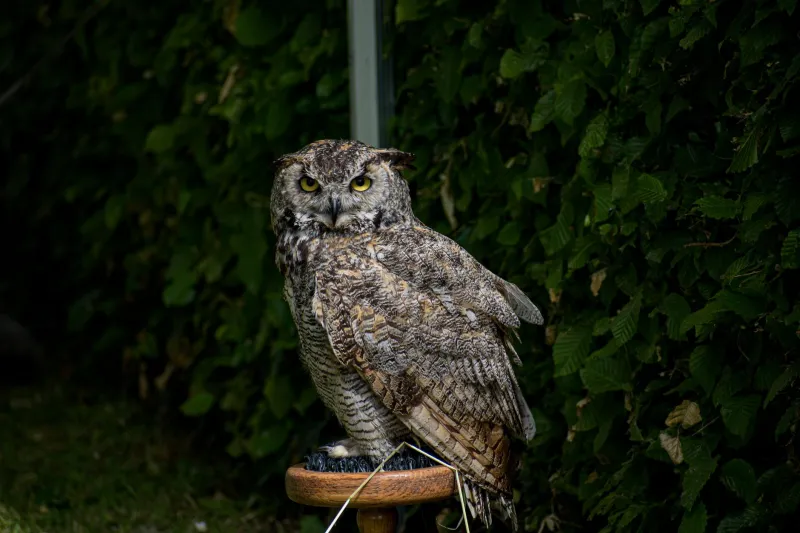
Love Them or Leave Them Alone: The Uncomfortable Truth About What Your Fish Owl Obsession Is Actually Doing to Fish Owls
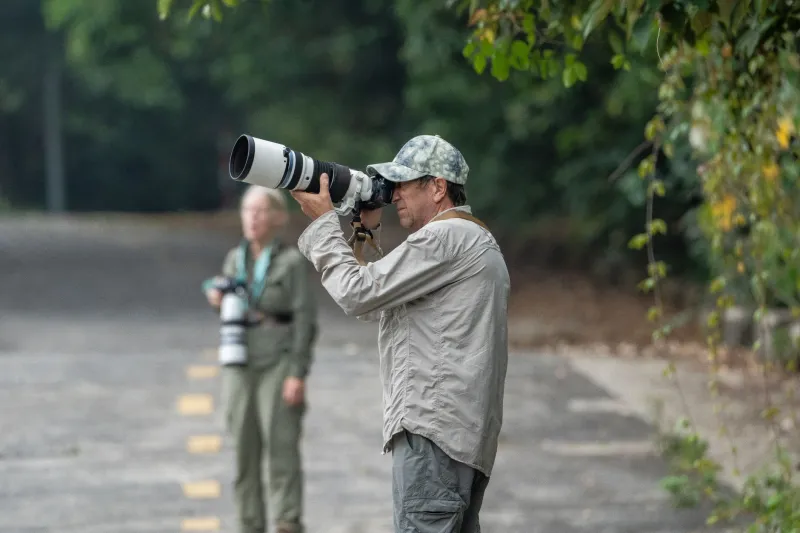
Let's get one thing straight before we go any further: nobody here is the villain. The people showing up at dawn with carbon-fiber tripods and telephoto lenses that cost more than a used Honda Civic are not bad people. The folks launching drones over riparian corridors to snag aerial footage of a nesting pair are, in their own minds, documentarians. Even the enthusiast who posts GPS coordinates of a known roost tree to a Facebook birding group with 40,000 members genuinely believes they're spreading the love.
And that's exactly the problem.
Fish owl fandom in America has exploded over the past decade, and with it has come a particular flavor of unintentional harm that the conservation community is increasingly struggling to address politely. Because how do you tell someone who woke up at 3 a.m. and drove to rural Oregon for the love of a bird that they are, functionally, a predator?
You say it clearly, with data, and maybe a little humor. That's what we're here for.
What Stress Actually Looks Like on a Fish Owl (Hint: It's Not Dramatic)
Here's the sneaky thing about wildlife stress — it rarely looks like panic. A fish owl doesn't flail around and tweet distress calls when a photographer sets up 30 feet from its nest. It sits there. It looks majestic. It tolerates you.
But internally, its heart rate has spiked. Cortisol — the stress hormone — is flooding its system. If this happens repeatedly during the breeding season, the physiological cost accumulates. Incubation behavior gets disrupted. Adults may abandon nests temporarily to flee perceived threats, leaving eggs or chicks exposed to temperature fluctuations or actual predators. Chick development can suffer. In severe cases, nest abandonment becomes permanent.
Researchers have documented that even "quiet" human presence within critical buffer zones triggers measurable behavioral changes in nesting raptors. The owl doesn't have to fly away for the damage to be done. It just has to notice you — over and over again, every single weekend of nesting season, because you and seventeen other people found the same GPS pin on eBird.
The Drone Problem Is Real and It Is Getting Worse
If a person standing 40 feet from a nest causes stress, imagine what a buzzing mechanical object hovering directly overhead at eye level does. Spoiler: it's not great.
Drones have transformed wildlife photography in genuinely spectacular ways, and the footage they produce is undeniably breathtaking. But a drone descending on an active fish owl nest isn't a camera. From the owl's perspective, it's a large, loud, erratically moving aerial intruder — basically a nightmare scenario that evolution never prepared them to assess calmly.
Under the Migratory Bird Treaty Act, disturbing active nests is a federal offense. That applies to drone operators. The U.S. Fish and Wildlife Service has issued guidance discouraging drone use near nesting birds, and several state wildlife agencies have gone further with explicit prohibitions during breeding seasons. The enforcement is patchy, but the law is clear. "I just wanted a cool shot" is not a legal defense.
If you own a drone and you love fish owls, the rule is simple: keep it grounded from February through August near any known nesting area. Period.
The GPS Coordinate Catastrophe
Posting precise location data for sensitive wildlife is one of those behaviors that feels generous and community-spirited right up until it causes a measurable ecological disaster. Sharing coordinates for a rare fish owl sighting in a public forum doesn't just notify other enthusiasts — it creates a pilgrimage destination.
A single fish owl pair nesting along a quiet creek can go from experiencing zero human visitors to hosting a rotating cast of dozens per week, all because someone posted a pin with the caption "AMAZING find!!" Most of those visitors are considerate. Some aren't. Cumulatively, even the considerate ones add up to a constant stream of disturbance during the most biologically critical window of the year.
Responsible practice: share general region information publicly, and reserve precise locations for trusted contacts who have demonstrated ethical observation habits. Many birding platforms now offer location obscuring features for sensitive species — use them.
So What Does Ethical Fish Owl Watching Actually Look Like?
Glad you asked, because this isn't all doom and guilt-tripping. Watching fish owls ethically is genuinely doable, and it's also — arguably — more rewarding than the aggressive-proximity approach, because patient, respectful observation tends to yield far more natural behavior.
Distance is your first variable. For nesting fish owls, wildlife biologists generally recommend staying at least 100 meters (roughly 330 feet) from an active nest. During feeding observations at waterways, 50 meters is a reasonable baseline, though more is always better. If the bird is looking at you, you're too close. If it's changing its behavior because of you, you're definitely too close.
Timing matters enormously. Dawn and dusk are peak activity windows, but they're also peak stress windows during breeding season. Limit visits. One visit per outing, brief and purposeful, beats three hours of stationary presence. And if you're visiting a site that's clearly already receiving heavy traffic from other observers, consider skipping it entirely and finding a less-pressured location.
Stay on established paths. Trampling riparian vegetation to get a marginally better angle isn't just bad for the owl — it degrades the habitat that makes the location worth visiting in the first place. The muddy scramble through streamside brush to position yourself three feet closer is never worth it.
Playback calls are a hard no during nesting season. Broadcasting recorded fish owl vocalizations to attract birds is manipulative at the best of times and genuinely harmful during breeding. It provokes territorial responses that burn energy birds need for reproduction and chick-rearing. Save the audio files for identification practice at home.
Ditch the flash. Nocturnal birds have highly sensitive eyes adapted to low-light conditions. A flash going off in their face is the avian equivalent of someone shining a flashlight directly into your eyes while you're trying to do surgery. Use high-ISO settings, shoot in available light, and if the conditions won't support a decent shot without flash, that's nature telling you to put the camera down and just watch.
The Hardest Part: Policing Your Own Community
Here's where it gets socially awkward. Most of the people engaging in harmful behavior around fish owls are fellow enthusiasts — people you recognize from the same Facebook groups, the same guided tours, the same regional birding clubs. Calling them out feels confrontational. It risks drama. It's easier to say nothing.
But silence is a choice too, and it has consequences. The conservation community has increasingly recognized that peer accountability within enthusiast groups is one of the most effective tools available, precisely because it doesn't require law enforcement and it reaches people who genuinely care about doing the right thing.
You don't need to be aggressive about it. A quiet word — "hey, that nest is pretty active, maybe we give it a bit more room?" — is usually enough. Most people, when informed rather than shamed, adjust their behavior immediately. They didn't know. Now they do.
That's how a community that actually loves fish owls behaves: not just in how we treat the birds, but in how we treat each other when the birds are on the line.
The Bottom Line
Fish owls are extraordinary. The desire to get close, to document, to share — that impulse comes from a genuinely good place, and it fuels the kind of public enthusiasm that ultimately supports conservation funding and habitat protection. None of that enthusiasm is worth abandoning.
But love, in the wildlife context, is a verb that sometimes means staying home. It means leaving the drone in the car. It means deleting the pin before you post it. It means watching from far enough away that the owl doesn't know you're there at all — and finding, in that quiet distance, something that feels a lot more like wonder than a close-up shot ever could.