Fins Out of Water: How a Warming Planet Is Sending Fish to New Zip Codes—and Leaving Owls to Figure It Out
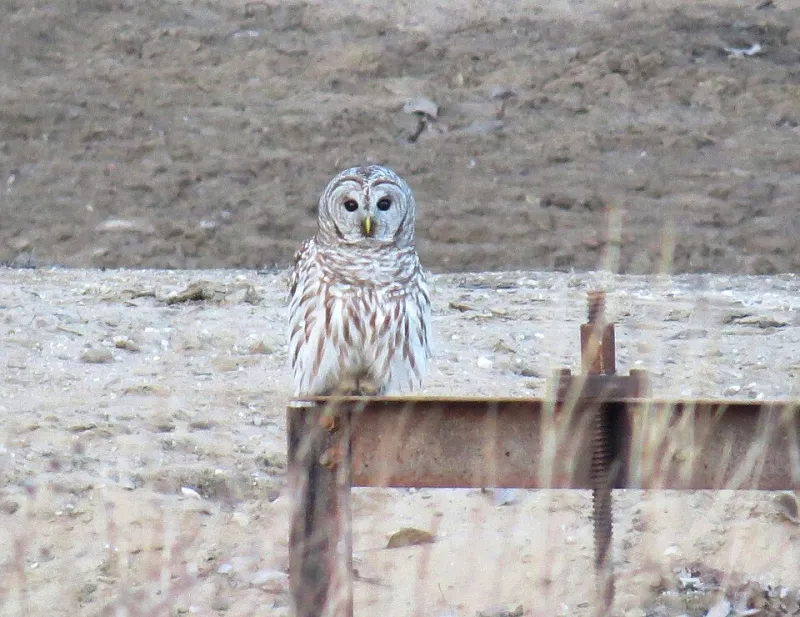
Photo: USFWSmidwest, Public domain, via Wikimedia Commons
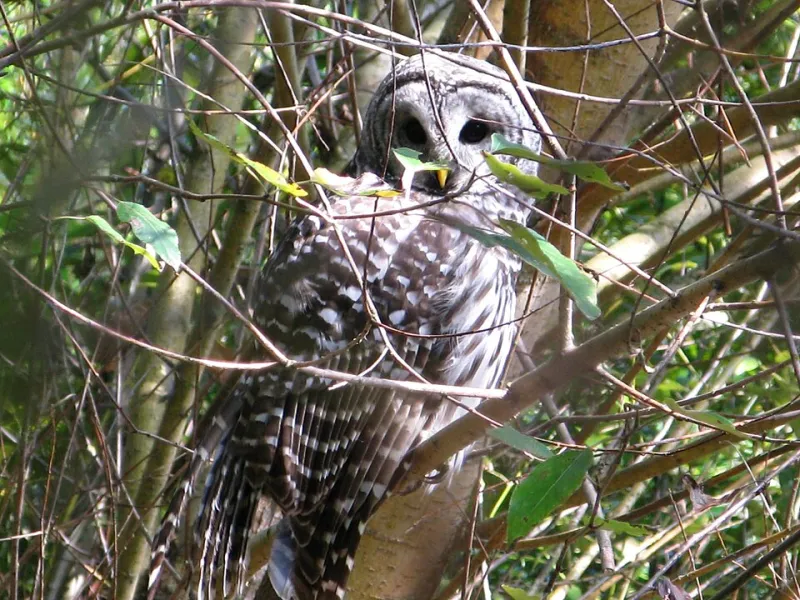
Picture a Barred Owl, perched low over a Tennessee creek on a moonless October night. For generations—its parents', its grandparents', stretching back through centuries of evolutionary fine-tuning—this particular stretch of water reliably delivered crayfish and small fish within easy striking distance. The owl knows this creek. The creek, however, has recently stopped cooperating.
The water is warmer now. The fish that once crowded these shallows have pushed upstream, chasing cooler temperatures. And the owl is left recalculating, mid-hunt, in a world that's quietly rearranged the furniture.
This is not a hypothetical. It is happening now, in waterways across North America, and the consequences are rippling upward through food webs in ways that researchers are only beginning to fully map.
The Fish Are Moving. Nobody Sent an Itinerary.
Freshwater fish are among the most thermally sensitive vertebrates on Earth. Many species have evolved to thrive within a narrow temperature band, and when water temperatures climb—even by a degree or two Celsius sustained over years—the pressure to relocate becomes biological imperative rather than lifestyle preference.
Across the continental US, the pattern is consistent and well-documented: cold-water species are retreating to higher elevations and higher latitudes. Brook Trout in the southern Appalachians have contracted their range dramatically over the past half-century, retreating to headwater streams where they can still find thermal refuge. In the Great Lakes region, Lake Whitefish and Cisco—both critical prey items for a range of fish-eating wildlife—are shifting their depth distributions as surface temperatures rise.
"We're essentially watching a slow-motion reshuffling of the biological deck," says Dr. James Okafor, a freshwater ecologist at Michigan State University. "The species that can move are moving. The ones that can't are declining. And every predator up the food chain has to adapt to a menu that changes a little more each decade."
Warm-water species, meanwhile, are expanding into territory that cold-water fish once dominated. Largemouth Bass are appearing in lakes in Minnesota and Wisconsin where they were historically absent. Common Carp—already one of the most ecologically disruptive fish in North America—are colonizing new river systems as winter temperatures moderate. The invasion is quiet, gradual, and relentless.
Owls as Unexpected Ecosystem Indicators
Here's where it gets particularly interesting for those of us who spend an unreasonable amount of time thinking about owls (guilty as charged). Several North American owl species are opportunistic fish hunters—the Barred Owl, the Great Horned Owl, and most dramatically, the Snowy Owl during irruption years when it ventures south from the Arctic tundra. And Burrowing Owls in Florida and the Southwest occasionally wade into shallow water for small fish and amphibians.
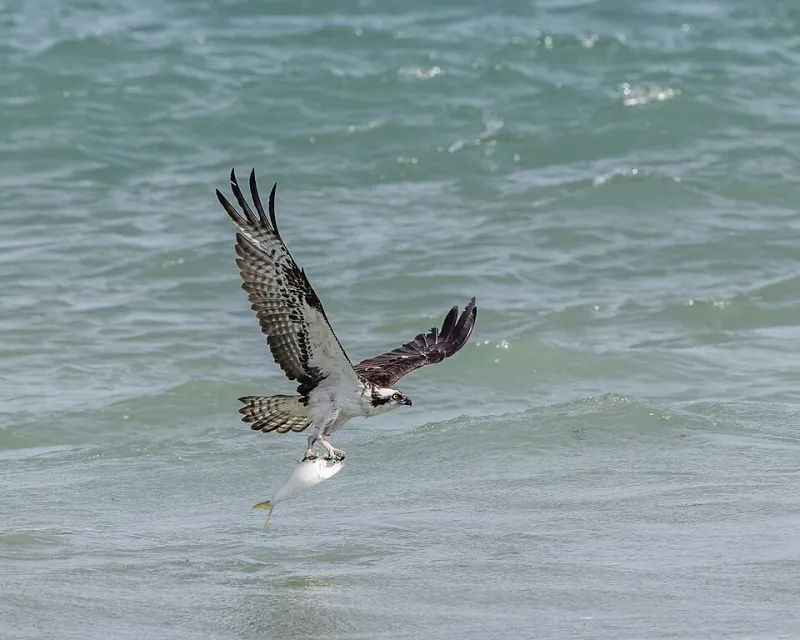
None of these species are as specialized as, say, the Osprey or the Belted Kingfisher. But fish constitute a meaningful portion of the diet for Barred Owls in wetland-adjacent territories, and behavioral ecologists have started using owl dietary data—gleaned from pellet analysis—as a proxy indicator for what's happening in local aquatic ecosystems.
"When we see shifts in what species are showing up in Barred Owl pellets in a given watershed, it tells us something real about what's happening in the water," says Dr. Priya Mehta, an ornithologist at the University of Georgia who has been tracking Barred Owl populations in the Piedmont region. "It's like the owls are leaving us field notes."
In parts of the upper Midwest, researchers have noted Barred Owls increasingly ranging toward previously marginal wetland edges—areas that, as beaver activity expands northward and precipitation patterns shift, are becoming more productive shallow-water hunting grounds. The owls aren't following the fish out of ecological loyalty. They're following opportunity.
Case Studies: What's Happening on the Ground
The Pacific Northwest: Chinook and Coho Salmon runs in Oregon and Washington have become dramatically less predictable as snowpack declines and river temperatures spike during summer months. Great Horned Owls, which will opportunistically take salmon fry and small fish in shallow riffles, have been observed shifting their activity timing—hunting earlier in the season before water temperatures push fish into deeper, less accessible channels.
The Upper Midwest: Minnesota's boundary waters, long a cold-water stronghold, are experiencing gradual warming that's altering the depth at which Northern Pike and Walleye are accessible. Barred Owls in the region, whose range has been expanding northward for decades (a trend with its own complicated ecological implications for the Spotted Owl), are increasingly documented near beaver ponds and slow-moving streams where warming conditions are concentrating smaller, more accessible fish species.
The Southeast: Florida's intricate web of freshwater systems is being disrupted by saltwater intrusion and temperature extremes. Native fish like the Everglades Pygmy Sunfish are under pressure, while non-native species thrive. Great Horned Owls in South Florida, already eclectic hunters, appear to be leaning harder on amphibians and invertebrates as reliable fish sources become patchier.
What Does 2035 Look Like?
Scientists are cautious about precise predictions—ecosystems are dizzyingly complex—but the directional signals are clear enough to sketch a rough picture.
Dr. Okafor projects that by 2035, the thermal habitat for cold-water fish species in the lower 48 will have contracted by an additional 15 to 20 percent from today's already-reduced baseline. That's not a distant abstraction. It means fewer Brook Trout in Virginia's Shenandoah, fewer Bull Trout in Idaho's Clearwater drainage, fewer Lake Trout in the southern Great Lakes.
For fish-eating wildlife—owls included—this means continued pressure to diversify diet, expand territory, or both. Species with behavioral flexibility will fare better. Those locked into narrow ecological niches face steeper challenges.
"The Barred Owl is probably going to be fine," says Dr. Mehta, with a mix of admiration and exasperation that anyone who studies this species will recognize. "It's an ecological opportunist of the highest order. It'll find a way. The question is what gets crowded out in the process."
The Snowy Owl, whose irruption patterns are tied to lemming cycles in the Arctic but which relies on coastal fish and waterfowl when it ventures south, faces a more uncertain calculus as Arctic ecosystems destabilize in ways that are difficult to model with confidence.
The Takeaway for the Rest of Us
There's a temptation, when reading about climate-driven ecosystem shifts, to file it under "big and abstract" and move on. The fish-owl connection offers a different kind of entry point—one that's immediate, local, and surprisingly visible if you know where to look.
The next time you're standing by a creek at dusk and a Barred Owl drifts silently overhead, consider what it's actually doing: running real-time calculations about a landscape that's changing faster than any owl has had to reckon with in recorded history. It doesn't have the luxury of waiting for the 2035 projections. It's adapting right now, one hunt at a time.
We'd do well to pay attention.
The owl, for its part, would probably appreciate it if we also did something about the water temperature. But it's far too dignified to ask.