Hoo's Moving In? The Backyard Owl Box Craze Taking Suburban America by Storm
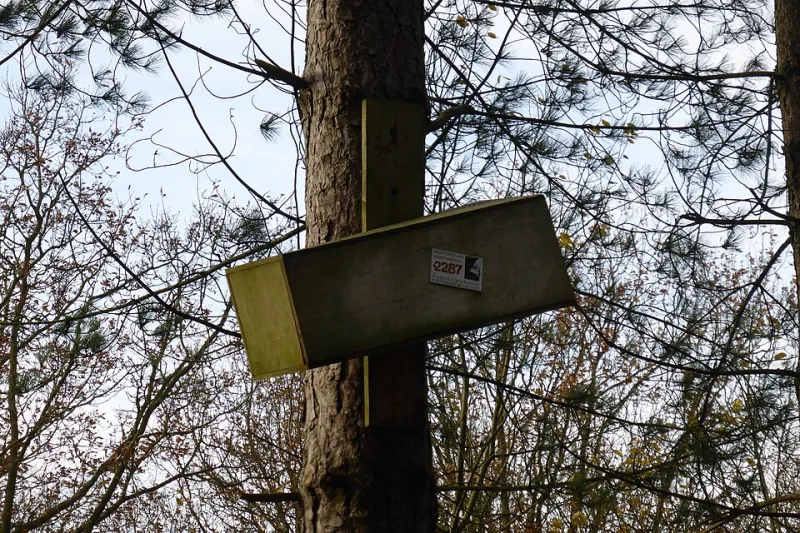
Photo: Bob Harvey , CC BY-SA 2.0, via Wikimedia Commons
Somewhere in a quiet cul-de-sac in suburban Columbus, Ohio, Janet Mercer is standing in her pajamas at 2 a.m., phone camera pointed at a wooden box mounted twelve feet up her silver maple tree. Inside that box, a pair of Eastern Screech-Owls is raising three fluffy, indignant-looking owlets. Janet doesn't mind the lost sleep. "I've never felt more like a wildlife documentary host in my life," she says, grinning.
Janet is far from alone. Across the country, a quiet revolution is unfolding in backyards, suburban greenbelts, and hobby farms. Americans are installing owl boxes at a rate that's got wildlife biologists doing double-takes—and, honestly, doing a little happy dance too. Sales of owl nesting boxes have surged in recent years, with platforms like Etsy reporting a spike in handcrafted owl house listings, and organizations like the Cornell Lab of Ornithology fielding more questions about owl habitat than ever before.
So what's driving this feathered real estate boom? And more importantly—what actually happens when a wild owl decides your backyard is the neighborhood it wants to raise a family in?
Why Everyone Suddenly Wants an Owl for a Neighbor
Let's be honest: owls have incredible marketing. Silent, mysterious, and possessed of a stare that suggests they know something you don't, these birds have always captured the human imagination. But the current wave of interest isn't purely aesthetic. It's practical, too.
"People are finally connecting the dots between owls and pest control," says Dr. Rachel Nguyen, a wildlife ecologist at the University of Wisconsin-Madison. "A single Barn Owl family can consume over 1,000 rodents in a nesting season. That's a lot of mice that aren't getting into your garage or your garden."
For homeowners who'd rather not deploy traps or poison—both of which carry their own ecological baggage—inviting an owl to take up residence is an appealing, chemical-free alternative. Vineyards in California's wine country caught onto this years ago, installing Barn Owl boxes between rows of vines to naturally suppress vole populations. The approach worked so well that backyard gardeners across the Sun Belt and Midwest started copying the playbook.
Then came the pandemic, which sent millions of Americans outdoors and curious about the natural world happening right outside their windows. Birding exploded as a hobby. And somewhere along the line, people stopped being satisfied with just watching birds—they wanted to host them.
Building the Perfect Owl Airbnb
Not all owl boxes are created equal, and matching your box to the right species is critical. Slapping up a generic birdhouse and hoping for the best is a bit like leaving a studio apartment listing and expecting a family of six to sign the lease.
Eastern and Western Screech-Owls, the most common backyard guests across much of the US, prefer smaller boxes with a roughly 3-inch entrance hole, mounted 10 to 30 feet off the ground on a tree or post. Barn Owls—the rodent-control rockstars—need a larger box, ideally placed 15 to 20 feet high on a barn wall, utility pole, or sturdy post in open country. Great Horned Owls, the apex units of the owl world, typically skip the box entirely and prefer to commandeer old hawk or crow nests, which is very on-brand for them.
"Ventilation and drainage are non-negotiable," advises Tom Calloway, a volunteer nest box monitor with the Texas Wildlife Association who has installed over 200 Barn Owl boxes across central Texas. "A waterlogged box in July is not a wildlife sanctuary. It's a sauna nobody asked for."
Calloway also recommends untreated wood—cedar or pine work great—and skipping the perch below the entrance hole. "Perches look cute to humans but they give predators like raccoons an easy foothold. Owls don't need them. They're owls."
The Moment of Truth: Will Anyone Actually Move In?
Here's the part nobody warns you about: owl boxes require patience. A lot of it. You might install your box in October and spend the entire winter checking it obsessively, convinced you've done something wrong, only for a pair of Screech-Owls to casually appear in March like they've been considering the neighborhood for months and finally decided the commute works.
"We waited two full years," laughs Marcus Webb, a software engineer in Raleigh, North Carolina, who built his first owl box from a YouTube tutorial. "And then one morning I looked out the kitchen window and there was a Screech-Owl just sitting in the entrance hole, staring at me like I was the one who needed to explain myself."
Wildlife biologists suggest giving a new box at least two nesting seasons before assuming it's a bust. Location matters enormously—boxes near open fields or water tend to attract tenants faster, and avoiding spots directly under bright security lights helps, since owls generally prefer their hunting grounds to not feel like a stadium.
The Ecological Ripple Effect
Beyond the sheer delight of having a nocturnal neighbor, owl boxes contribute to something genuinely meaningful. Habitat loss has hit cavity-nesting birds hard across the US, as old-growth trees with natural hollows disappear and urban sprawl eliminates nesting real estate. Artificial nest boxes help fill that gap.
"We've seen measurable population stabilization in Barn Owls in areas where box programs have been running for ten or more years," says Dr. Nguyen. "It's one of the clearest examples of how citizen-led conservation efforts can move the needle at a landscape scale."
There are caveats, of course. Boxes placed too close together can create competition stress. Poorly maintained boxes can harbor parasites. And occasionally, a box intended for an owl ends up housing a very smug family of flying squirrels instead, which is its own kind of wildlife experience.
Ready to Become an Owl Landlord?
If you're ready to join the movement, here's a quick-start checklist:
- Identify your target species based on your region and habitat. The Cornell Lab's All About Birds website is your best friend here.
- Build or buy a species-appropriate box from untreated wood. Avoid painted interiors.
- Mount it correctly—height, direction, and stability all matter.
- Add wood shavings (not sawdust) for Screech-Owls; Barn Owls prefer a bare floor.
- Monitor responsibly—check boxes in late winter to clear out old nesting material, but never disturb active nests.
- Be patient. Seriously. They'll show up when they're ready, and not a moment before.
Janet Mercer, back in Columbus, has now been an owl landlord for three seasons running. Her Screech-Owls return every year, and she's become the unofficial owl correspondent for her neighborhood Facebook group. Neighbors stop by to peer up at the box. Kids from the next street over come to see if the owlets have fledged yet.
"It started as a thing I was doing for the owls," she says. "But honestly? It's become something the whole neighborhood is doing together."
And somewhere up in that silver maple, a small feathered face peers down at all of us, utterly unimpressed—and absolutely magnificent.