Feathers, Fish, and Freshwater: How Owls Are Secretly Keeping Score on America's Wetlands
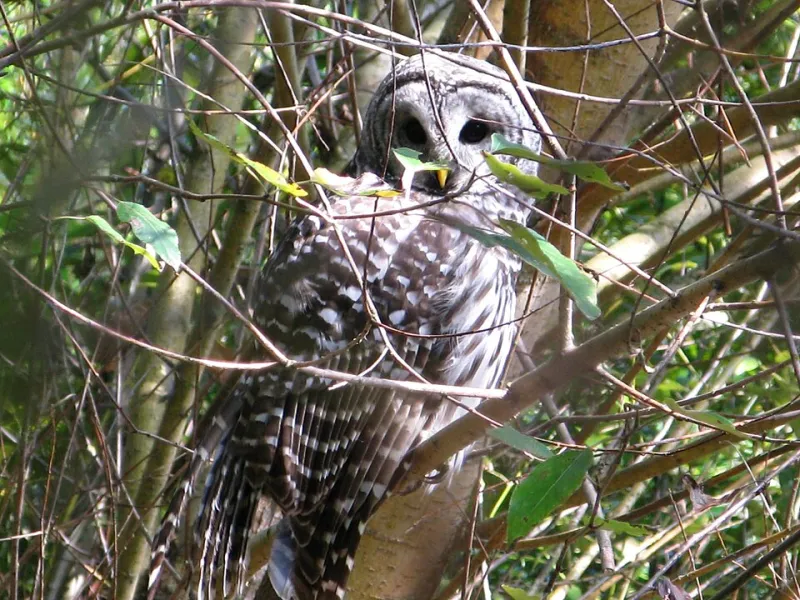
Photo: ConservationKM, CC BY-SA 4.0, via Wikimedia Commons
Let's be honest. When most people think about environmental health indicators, they picture scientists in rubber waders poking at water samples, or maybe a very serious documentary narrator intoning gravely over footage of algae blooms. What they probably don't picture is a plump, indignant barred owl staring them down from a cypress tree at 2 a.m., silently judging both their flashlight technique and the quality of the local frog population.
But here's the thing: that owl knows something. And if you're paying attention, it'll tell you everything you need to know about the wetland it calls home.
Why Owls Are the Ultimate Wetland Report Cards
Scientists have long used so-called "indicator species" — organisms whose presence, absence, or population trends signal broader ecological shifts — to gauge environmental health. Fish get a lot of that spotlight (we're not complaining, given our brand name), but owl populations, particularly those tied to freshwater ecosystems, are proving to be remarkably precise instruments for measuring wetland vitality.
Here's the logic, and it's beautifully simple: owls sit near the top of their local food chains. A healthy wetland supports abundant aquatic insects, which feed small fish and amphibians, which in turn feed larger fish and mammals, which eventually end up on the menu for apex predators like owls. When something goes sideways at any point in that chain — pollution, drought, invasive species, habitat loss — the effects ripple upward. Owl populations don't lie. They either show up and thrive, or they quietly vanish, which is nature's version of a very ominous out-of-office message.
Species like the barred owl (Strix varia), the great horned owl, and the short-eared owl (Asio flammeus) are particularly telling in freshwater environments. The short-eared owl, for instance, is a wetland specialist that nests in open marshes and hunts voles and other small mammals along marsh edges. When short-eared owl numbers drop in a region, it's often a sign that the marsh grasses are degrading, water levels are fluctuating erratically, or the small mammal community has collapsed — all red flags for overall wetland function.
The Fish Connection Nobody Talks About at Dinner Parties
Here's where it gets genuinely fascinating — and where Fish Owls readers will feel particularly seen. Several owl species have direct dietary ties to aquatic life. The barred owl, a common resident of swampy bottomland forests across the eastern and central US, regularly dines on crayfish, small fish, and frogs in addition to the usual rodent fare. In the Pacific Northwest, the spotted owl (Strix occidentalis) inhabits old-growth forests adjacent to salmon-bearing streams, making its health intertwined with the broader aquatic ecosystem.
Meanwhile, true fish owls — members of the genus Ketupa and Scotopelia — don't live in North America, but their ecological niche here is partially filled by species like the great horned owl, which has been documented wading into shallow streams to snag fish in a move that is equal parts impressive and deeply undignified.
When fish populations in a wetland decline due to poor water quality, sedimentation, or chemical runoff, the owls that depend on those aquatic food sources feel the squeeze almost immediately. Monitoring owl diversity and abundance near freshwater systems thus gives conservationists an indirect but powerful window into fish community health — no waders required (though the owls do silently judge your footwear regardless).
You Can Help: Citizen Science Is Having Its Moment
Here's the genuinely exciting part, especially for outdoor enthusiasts who've been looking for a reason to justify those late-night hiking expeditions to their significant others. Citizen science owl monitoring programs across the United States are actively recruiting volunteers, and the data collected by amateur naturalists has become genuinely indispensable to conservation research.
eBird (Cornell Lab of Ornithology): The granddaddy of bird-reporting platforms, eBird allows anyone with a smartphone to log owl sightings in real time. The resulting dataset is now one of the largest wildlife databases on Earth, and researchers actively use it to track population trends, range shifts, and habitat associations. Logging a single barred owl heard hooting over a Georgia swamp at midnight is a small act with surprisingly large scientific ripple effects.
North American Breeding Bird Survey (BBS): Run by the US Geological Survey and the Canadian Wildlife Service, the BBS uses established roadside survey routes — many of which pass through or near wetland habitats — to track bird population trends annually. Volunteer observers follow specific protocols at dawn each spring, and the resulting long-term data has been instrumental in identifying species in decline.
Local Audubon Christmas Bird Counts: Every December, thousands of volunteers across the US fan out across defined geographic circles to count every bird they can find in a single day. Owls are notoriously tricky to tally (they're not exactly cooperative), but persistent night-before owl surveys have become a cherished tradition among hardcore birders. Find your local chapter at audubon.org.
Project OwlNet: A network of owl banding stations across North America focused specifically on migratory owl species, Project OwlNet generates population data that's critical for understanding how wetland-dependent owls are faring across their full annual ranges.
What to Listen For (Yes, Listen)
Owl monitoring doesn't require binoculars — it requires ears. Most owl surveys are conducted by listening for vocalizations at dawn or dusk, particularly during breeding season when territorial calls are at their most enthusiastic. The barred owl's classic "who cooks for you, who cooks for you-all" is practically impossible to miss once you've heard it. The great horned owl's deep, resonant hooting is the stuff of every camping trip ghost story. And the barn owl's blood-curdling screech has launched approximately ten thousand panicked calls to local wildlife hotlines from people convinced they heard something dying in their backyard (it was fine; it was always fine).
If you live near a wetland, river corridor, or marshy area, simply spending thirty minutes outside after dark a few times a month and logging what you hear on eBird puts you squarely in the ranks of contributing citizen scientists. Wear bug spray. Bring a headlamp. And maybe don't announce your presence by tripping over a root — the owls already think humans are ridiculous enough.
The Bottom Line
Nature has been running its own environmental monitoring program for millions of years, and owls are among its most reliable field agents. As wetlands across the US face mounting pressures from development, agricultural runoff, climate-driven drought, and invasive species, the birds that depend on healthy freshwater ecosystems are increasingly important as early warning systems.
The good news? You don't need a PhD or a government grant to contribute meaningful data. You just need a willingness to stand in a marsh at dusk, listen carefully, and maybe develop a healthy appreciation for creatures that can rotate their heads 270 degrees and have absolutely zero respect for your personal sense of dignity.
Welcome to the night shift. The owls have been expecting you.