Talons, Tactics, and Total Chaos: Ranking America's Wildest Fish-Hunting Raptors
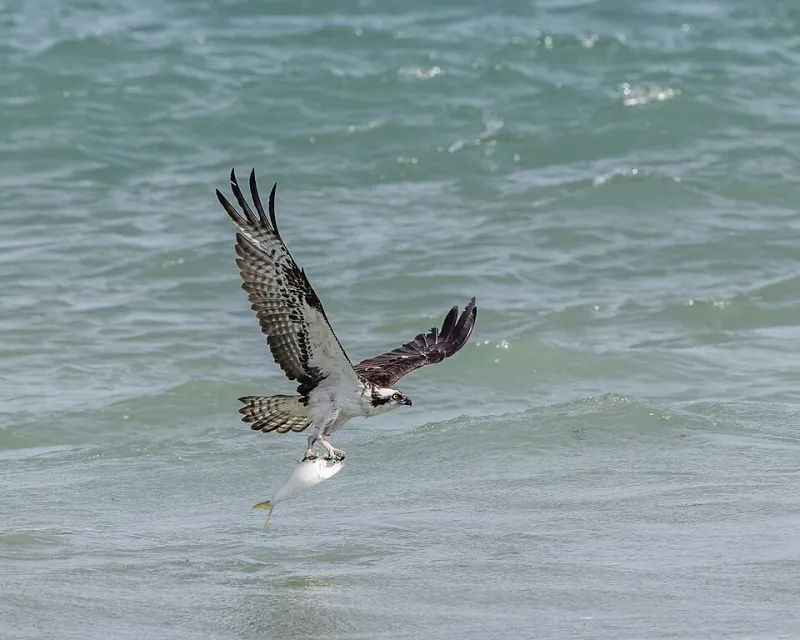
Photo: Andy Morffew, CC BY 2.0, via Wikimedia Commons
Talons, Talons, Talons: Ranking America's Wildest Fish-Hunting Raptors From Gloriously Skilled to Gloriously Unhinged
If you've ever watched a bald eagle attempt to steal a fish from an osprey mid-flight — the osprey screaming, the eagle looking vaguely embarrassed, the fish presumably reconsidering all of its life choices — you already understand the core premise of this article. America's waterways are home to some of the most spectacular, most skilled, and occasionally most hilariously inept aerial hunters on the planet. We at Fish Owls feel a deep personal obligation to rank them.
Criteria, because we are professionals: hunting success rate, unique physical adaptations, regional accessibility for US birdwatchers, documented comedic failures (this is a real metric), and the general vibe the bird brings to a lakeside morning. Let's get into it.
🥇 #1: The Osprey (Pandion haliaetus) — The Undisputed Specialist
Hunting Style: Aerial dive-bomb from heights of up to 130 feet, feet-first entry, full underwater plunge Success Rate: Approximately 70% — basically a Hall of Fame batting average for a bird Comedic Failure Potential: Low, which is honestly a little boring
The osprey is the fish-hunting raptor that actually did its homework. Unlike nearly every other bird of prey, the osprey has evolved almost exclusively to catch fish — and the résumé is staggering. Reversible outer toes (so it can grip fish with two talons on each side rather than three-and-one)? Check. Closeable nostrils for underwater entry? Check. Spiny toe pads called spicules that grip wet, slippery fish like a biological pair of rubber gloves? Oh yes, absolutely check.
When an osprey spots a fish from altitude, it hovers, adjusts, and then drops in a controlled plunge that would make an Olympic diver nod with grudging respect. It hits the water feet-first, sometimes disappearing completely beneath the surface, and usually emerges with a fish that it immediately rotates head-forward for aerodynamic efficiency. The fish is aerodynamically optimized. Mid-flight. By a bird.
Where to See Them: Ospreys nest across virtually the entire continental US near bodies of water — from the Florida Everglades to Pacific Northwest salmon rivers to the Great Lakes shoreline. Look for their massive, messy stick nests on channel markers, cell towers, and utility poles. They are not subtle about their real estate choices.
Wildlife Photographer Dispatch: "I watched one osprey at a Montana reservoir miss three dives in a row, come up empty, shake off like a wet dog, and then absolutely nail a twelve-inch trout on the fourth attempt. The bird then made direct eye contact with me for about four seconds. I felt like I'd witnessed something private." — Freelance wildlife photographer, Missoula, MT
🥈 #2: The Bald Eagle (Haliaeetus leucocephalus) — The Overconfident Executive
Hunting Style: Surface snatch, theft, opportunistic scavenging, dramatic posing Success Rate: Variable, but dramatically improved when someone else has already caught the fish Comedic Failure Potential: Extremely high, and well-documented
The bald eagle is America's national symbol, which means it has an enormous amount of brand identity to maintain and occasionally fails to live up to it in spectacular fashion. Make no mistake — a bald eagle snatching a fish from the surface of a river with a single talon swipe is genuinely breathtaking. The wingspan, the white head, the yellow talons catching morning light — it's the wildlife equivalent of a movie trailer.
But then there's the other bald eagle. The one that spends forty-five minutes harassing an osprey until it drops its catch. The one that misjudges a surface grab and ends up swimming to shore using its wings as paddles, looking profoundly undignified. The one that Benjamin Franklin famously (and somewhat unfairly) called "a bird of bad moral character" for its kleptoparasitic tendencies. Benjamin Franklin may have had a point.
Bald eagles are also notorious for occasionally catching fish too large to carry and being dragged through the water before either releasing their grip or — in documented cases — deciding to just swim the fish to shore because they absolutely will not admit a mistake. This is called "kayaking" among birders, and it is one of the funniest things a national symbol can do.
Where to See Them: Winter concentrations along open rivers in the Pacific Northwest, the Mississippi River corridor, and the Chesapeake Bay region are spectacular. Alaska is basically just a bald eagle theme park. Yellowstone's rivers in winter offer reliable sightings near open water.
Wildlife Photographer Dispatch: "I have approximately 400 photos of bald eagles looking majestic. I also have one video of one swimming. The video has more views." — Nature photographer, Homer, AK
🥉 #3: The Great Horned Owl (Bubo virginianus) — The Chaotic Wildcard
Hunting Style: Night ambush, wading, extreme opportunism, pure audacity Success Rate: Nobody knows, because it hunts in the dark and tells no one Comedic Failure Potential: Theoretically infinite, but it would never let you see
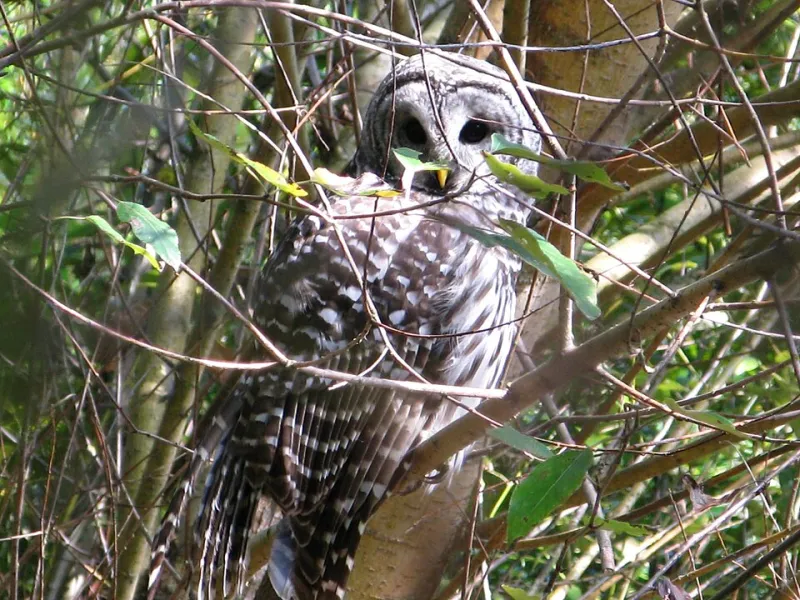
Nobody invited the great horned owl to the fish-hunting competition. The great horned owl showed up anyway, caught a fish in a shallow stream at 3 a.m., ate it without ceremony, and went back to doing whatever it does in the dark. This is the bird's entire personality.
Great horned owls are generalist predators of legendary flexibility — they'll eat skunks (the only raptor that regularly does), house cats, other raptors, and yes, fish. Reports of great horned owls wading into shallow streams and grabbing small fish are well-documented, and the mental image of the largest common owl in North America standing in a creek looking deeply serious about a trout is something we at Fish Owls treasure deeply.
They don't have the osprey's specialized adaptations or the eagle's raw size advantage, but they have something arguably more powerful: the absolute refusal to acknowledge any situation as outside their capabilities.
Where to See Them: Everywhere. Literally everywhere in North America. Forest edges near rivers, lakeside woodlands, suburban parks adjacent to wetlands. Listen for their deep, evenly-spaced hooting starting at dusk. If you hear it and feel vaguely unsettled, that's correct.
Honorable Mentions: The Supporting Cast
Belted Kingfisher — Technically not a raptor, but earns a standing ovation for diving headfirst into water from a perch and somehow surviving the experience thousands of times per year. Incredible. Unhinged. Beloved.
Great Blue Heron — A wading specialist rather than a flying hunter, the great blue heron stands motionless in shallows with the energy of someone who has fully accepted that patience is a competitive advantage. Catches fish with a spear-strike bill move that is extremely fast and extremely unsettling.
Snowy Owl — Primarily an Arctic species, but winter irruptions bring them to Great Lakes shorelines and coastal areas where they've been documented snatching waterfowl and occasionally fish from open water. They look like they've wandered in from another dimension and are mildly inconvenienced by everything.
Go Find Them Yourself
The best part about all of these birds? They're out there, right now, hunting America's rivers and lakes with varying degrees of grace and self-awareness. You don't need a guided tour or a fancy camera (though both help). You need a body of water, some patience, and a genuine willingness to find the moment a bald eagle decides to swim to shore deeply, deeply funny.
Download eBird. Find your nearest river, reservoir, or coastal estuary. Show up at dawn or dusk. And remember: the osprey is going to show everyone up, the eagle is going to try to steal credit for it, and somewhere in the dark, a great horned owl already knows exactly what's going to happen.
Happy hunting — vicariously, of course.