Lenses, Lifers, and the Lunatics Who Chase Fish-Eating Birds Across America

Photo by Photo by Dmytro Koplyk on Unsplash on Unsplash
Let's get one thing out of the way immediately: these people are not casual.
We're talking about enthusiasts who will wake up at 4:15 a.m. in a Louisiana bayou to catch a tricolored heron in pre-dawn light. People who have strong, considered opinions about the hunting strike angles of belted kingfishers versus green kingfishers. Individuals who have, on more than one occasion, stood waist-deep in a Montana river for three hours waiting for an osprey to make a move, and who describe this experience as "genuinely relaxing."
They call themselves aquatic birders, fish-bird chasers, or — in the more self-aware corners of the community — simply "the fish nerds." And their numbers are growing.
What Even Is Aquatic Birding?
Traditional birdwatching — the kind involving feeders, field guides, and a nice pair of binoculars on a suburban nature trail — has been America's second-most-participated outdoor recreation activity for years, with roughly 45 million participants according to US Fish & Wildlife Service surveys. It is a lovely, gentle hobby. Aquatic birding is its more chaotic cousin who shows up to Thanksgiving having just driven fourteen hours from a coastal estuary.
At its core, aquatic birding is the practice of specifically seeking out, observing, and photographing birds that hunt fish and other aquatic prey in their natural environments. That means herons, egrets, kingfishers, ospreys, cormorants, mergansers, anhingas, loons, pelicans, and a host of other spectacular creatures that have essentially built their entire existence around the art of pulling things out of water.
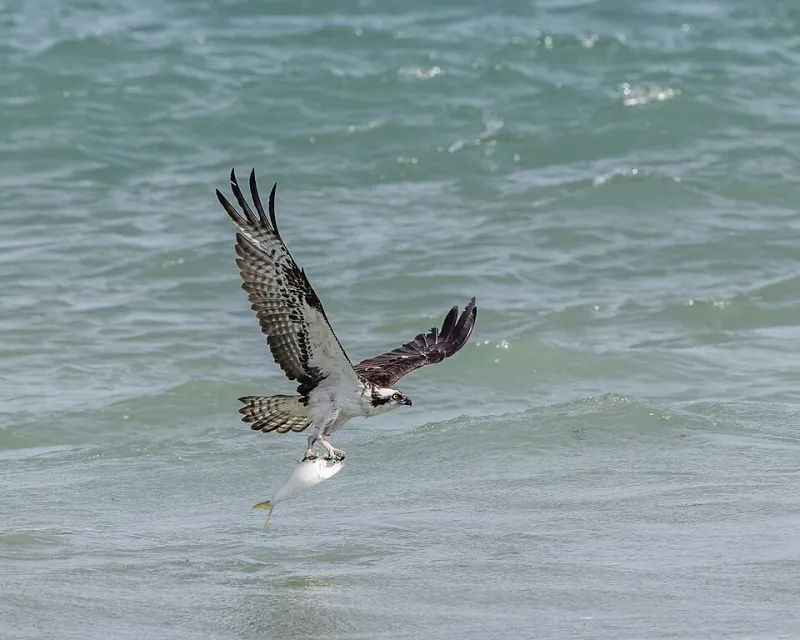
The appeal, enthusiasts will tell you, is about behavior. Sitting-in-a-tree birdwatching is wonderful, but watching a great blue heron stand absolutely motionless for eleven minutes and then strike with the speed of a thrown spear? That's a show. An osprey hovering forty feet above the Chesapeake before folding into a feet-first dive that hits the water like a feathered cannonball? That is cinema.
"Regular birding is incredible, I love regular birding," said one aquatic birding enthusiast from Oregon who runs a popular Instagram account dedicated entirely to Pacific Coast fish-hunting birds. "But there's something about watching a bird that's actively doing something. Hunting, diving, competing. It's got stakes."
The Hotspots That Draw the Faithful
Ask any aquatic birder where they'd go with unlimited time and a full tank of gas, and you'll get an extremely specific answer delivered at considerable speed.
The Everglades, Florida is more or less the Vatican of this hobby. The concentration and diversity of wading birds — roseate spoonbills, wood storks, tricolored herons, snowy egrets all operating in the same frame — is genuinely staggering. Anhinga Trail in Everglades National Park is something of a pilgrimage site, where anhingas — a bird that swims underwater to spear fish and then spreads its wings to dry because it lacks waterproofing oil — perform their full behavioral repertoire approximately ten feet from the boardwalk.
The Chesapeake Bay region draws osprey devotees from across the country. The bay hosts one of the densest breeding osprey populations in North America, and watching them work the shallows during peak season is the kind of experience that turns casual nature fans into people who own specialized photography equipment they cannot entirely explain to their families.
The Columbia River Gorge, Oregon/Washington is kingfisher country. The belted kingfisher — that rattling, electric-blue torpedo of a bird — thrives along the gorge's rivers and tributaries, and the dramatic landscape provides photographic context that makes already-great shots genuinely breathtaking.
Yellowstone's Lamar Valley offers something unexpected: dippers. The American dipper is a small, round, seemingly unremarkable bird that casually walks underwater along stream bottoms to hunt aquatic insects and small fish. Watching one do this for the first time tends to produce a reaction in observers that can only be described as "loud."
Monterey Bay, California brings the big guns — brown pelicans executing their signature plunge dives alongside Brandt's cormorants and the occasional jaeger stealing a meal mid-air. The bay's kelp forests and upwelling zones concentrate baitfish near the surface, which concentrates the birds, which concentrates the humans with cameras.
The Gear Situation (It's A Lot)
Here is where aquatic birding diverges most sharply from its more serene cousin. Traditional birdwatchers can get by with a decent pair of binoculars and a regional field guide. Aquatic birders, particularly those with photography ambitions, tend to exist on a spectrum from "very geared up" to "this is technically a financial decision my spouse doesn't fully know about."
A serious aquatic birding photography setup typically involves a telephoto lens of at least 500mm — often 600mm or more — mounted on a camera body with fast burst shooting and serious autofocus tracking capability. The reason is simple: a kingfisher's dive from perch to water and back lasts approximately 0.3 seconds. You either have the gear to capture it or you have a very nice photo of a splash.
Beyond cameras, the community has developed its own toolkit: chest waders for getting into position in shallow water without disturbing birds, camo or earth-tone clothing to reduce silhouette impact, and increasingly, mirrorless camera bodies prized for their silent shutters — because a noisy shutter near a skittish heron is a fast way to end your session.
There's also a growing contingent of aquatic birders who've largely abandoned photography in favor of pure observation and documentation, logging behavioral data through platforms like eBird and contributing to genuine citizen science databases. These folks tend to carry high-powered spotting scopes and look extremely wise.
Why This Hobby Is Having a Moment
Aquatic birding has been around as a practice forever — people have been watching herons fish since people existed — but as a self-identified community with its own vocabulary, hotspots, and social media presence, it's genuinely new, and it's growing fast.
Part of it is the pandemic-era outdoor recreation surge that sent millions of Americans outside and many of them toward wildlife watching. Part of it is Instagram and YouTube, where dramatic footage of osprey strikes and pelican dives performs extremely well and converts viewers into participants. And part of it, enthusiasts say, is a hunger for something more active than traditional nature observation.
"There's a real gamification to it," explained one Chicago-based aquatic birder who makes annual trips to the Texas Gulf Coast. "You're trying to be in the right spot at the right time, reading the water, predicting where the bird is going to hunt. When it works, it's incredibly satisfying. When it doesn't, you just got up really early and stood in a marsh, which honestly is also fine."
Online communities — Facebook groups, Reddit threads, Discord servers — have given geographically scattered enthusiasts a way to share sightings, hotspot tips, and the kind of extremely specific behavioral observations ("the great blue on the north side of the impoundment has a distinctive left-lean on its strike, anyone else noticing this?") that don't always land at the dinner table.
Getting Started Without Losing Your Mind
The good news: you don't need a $12,000 camera rig to get into this. A decent pair of 8x42 binoculars and a drive to your nearest river, lake, or coastal wetland is enough to start. Find a great blue heron. Watch it hunt. Watch it actually catch something. You'll understand the appeal immediately.
From there, the community is genuinely welcoming. Local Audubon chapters often have members deeply into aquatic species. State wildlife refuges — which tend to concentrate waterbirds in accessible areas — are excellent starting points. And eBird, Cornell Lab's free birding platform, lets you search recent sightings by species and location, essentially giving you a real-time map of where the action is.
Just maybe don't tell your family about the lens you're eventually going to buy. Some things are better revealed gradually.