Keeping Up With the Owl Joneses: When Backyard Bird Boxes Became a Full-Blown Status Symbol
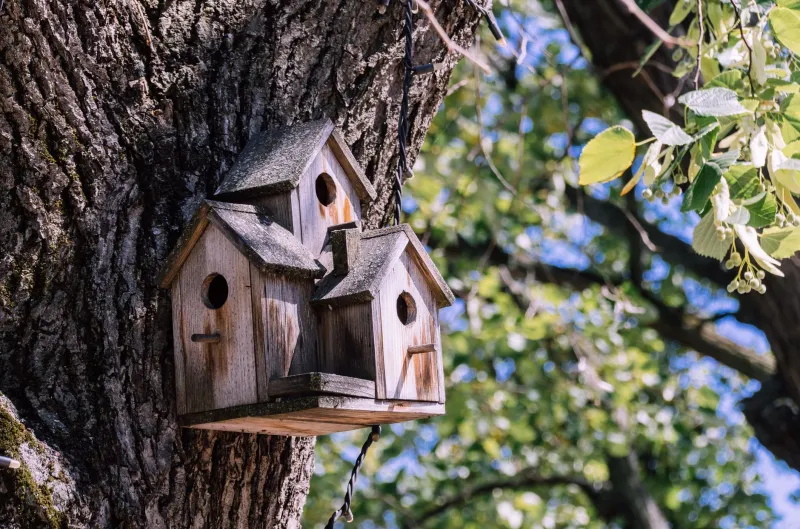
Somewhere in suburban America right now, a person is drilling ventilation holes into a hand-lathed cedar owl box with the focused intensity of a neurosurgeon. Next door, their neighbor is mounting a 4K infrared camera above a custom-built owl condo that features a cedar shake roof, a recessed entry hole beveled to the precise diameter recommended by the Cornell Lab of Ornithology, and — this is not a joke — a small engraved nameplate that reads "Casa Hoot."
Welcome to the Owl Box Arms Race. Population: everyone who has ever watched a screech owl peer out of a wooden cavity and thought, I could do better.
The backyard owl box hobby, once a charming and decidedly low-key pastime, has mutated into something spectacular, absurd, and — depending on your tolerance for competitive neighborly one-upmanship — deeply entertaining. Grab your binoculars and a comfortable lawn chair. This is going to take a while.
From Milk Crate to McMansion: A Brief History of Owl Box Escalation
The original owl box was, let's be honest, not glamorous. A pine board. Some screws. A hole. Done. Early adopters in the 1970s and '80s were thrilled if a screech owl so much as glanced at their creation. The bar was underground.
Then came the internet, and with it, the owl box forum. Suddenly, hobbyists in Ohio could compare notes with enthusiasts in Oregon. Photos were shared. Specs were debated. Someone posted a nest cam video of three owlets blinking at the camera and the whole thing went viral, and that was essentially the moment the humble wooden box died and the Owl Lifestyle was born.
Today, a quick scroll through any wildlife enthusiast forum will reveal owl boxes with built-in temperature monitoring, solar-powered LED perch lighting (tasteful, of course — the owls have standards), GPS trackers to log nest activity, and smartphone-connected cameras that send push notifications when an owl so much as rearranges a wood chip. One particularly ambitious hobbyist in Colorado reportedly installed a two-box compound with a connecting tunnel, which no owl has yet deigned to use, but which photographs extremely well.
The Tech Spiral: Useful Gadgets vs. Pure Peacocking
Here's where we have to pump the brakes slightly and ask the question nobody in the owl box community wants to answer: does any of this actually help the owls?
Short answer: some of it, yes. Most of it, no. All of it, absolutely hilarious.
Nest cameras are genuinely useful — not just for the dopamine hit of watching fluffy owlets argue over a vole, but for real data collection. Knowing when eggs are laid, how many hatch, and how long juveniles stay in the box helps researchers track population trends. Citizen science is a real and valuable thing, and backyard nest cams contribute meaningfully to it. So yes, go ahead and install the camera. You've earned this.
Ventilation and drainage are the unglamorous heroes of owl box design. A properly ventilated box prevents heat buildup in summer — critical in states like Texas and Arizona where a poorly designed box can become lethally hot. Drainage holes prevent moisture accumulation that leads to mold and parasites. These features cost almost nothing and matter enormously. And yet, somehow, they're the least Instagrammable upgrades imaginable.
Entry hole diameter is another legitimately important spec. Eastern screech owls prefer a 3-inch opening. Barn owls want something closer to 6 inches. Barred owls need even more room. Getting this wrong doesn't just reduce your chances of attracting occupants — it can actively invite the wrong species, including the dreaded European starling, which is essentially the raccoon of the bird world: clever, aggressive, and deeply unwelcome at your owl box.
Now, what doesn't matter to the owls?
The aesthetic finish. Your owls do not care if the box is stained in Weathered Driftwood or Rustic Walnut. They care about the cavity dimensions and whether it smells like predators. That's it. The artisanal hand-painted mural of a moonlit forest on the side panel is entirely for you, your Instagram followers, and the quiet, simmering judgment of your neighbors.
The brand of wood. Cedar is excellent because it resists rot. So is redwood. Untreated pine works fine if maintained. The owls are not comparing grain patterns.
The custom copper weathervane on top. We don't need to explain this one.
The Community Is the Point (Even When It's Ridiculous)
Here's the thing, though — and this is important — the arms race isn't really about the owls. It's about the people.
The owl box hobby, in all its over-engineered, thermally monitored, GPS-tagged glory, is a community activity. It's neighbors comparing notes over back fences. It's families checking the nest cam together before school. It's retirees in Facebook groups arguing passionately about interior wood chip depth at 11 PM on a Tuesday, which is objectively a better use of time than whatever else is on television.
The competitive energy — the gentle, good-natured one-upmanship of whose box got tenants first, whose owlets are fluffier, whose camera has better night vision — keeps people engaged. And engaged people plant more native trees, maintain more habitat, and advocate more loudly for the wetlands and woodlands that owls actually need to survive.
So yes, your neighbor's thermal camera setup is objectively unnecessary. Their custom cedar shake roof is pure vanity. The engraved nameplate is a lot. But they're also out there at dawn monitoring nest activity, reporting data to wildlife databases, and talking their entire neighborhood into putting up boxes of their own. That's not nothing.
What Actually Matters: A Cheat Sheet for the Sensible Enthusiast
If you're just getting into the owl box game and want to skip straight to the part where owls actually move in, here's your no-nonsense checklist:
- Match the box dimensions to your target species. Look up the specs. This is not optional.
- Ventilation holes near the top. At least four, roughly half an inch each.
- Drainage holes at the bottom. Four small holes. Done.
- Mount it 10–30 feet high depending on species, facing away from prevailing winds.
- Add 2–3 inches of wood shavings (not cedar chips — the oils can be irritating). Owls don't build nests; they need a substrate.
- Place it near hunting habitat — open fields, forest edges, water. Location is everything.
- Install a predator guard on the mounting pole. Raccoons are enthusiastic and amoral.
Everything else is optional. The camera is fun. The weathervane is for you. The nameplate is between you and whatever owl eventually moves in and refuses to acknowledge it.
The Bottom Line
The owl box arms race is, at its core, a love story — a slightly unhinged, thermally monitored, custom-roofed love story between humans and the wild creatures that share their backyards. The technology will keep evolving. The boxes will keep getting fancier. Someone, somewhere, is already designing an owl box with heated perches and a white noise machine, and honestly, we respect the commitment.
Just remember: the owl doesn't care about your aesthetic choices. It cares about the hole size, the height, the nearby hunting ground, and whether it feels safe.
Give it those things, and it will move in. Probably ignore the nameplate entirely. And you will love it unconditionally anyway.
That's the whole hobby, really. Welcome aboard.