Wanted: One Fish Owl (Actually a Barn Owl, a Heron, and Somebody's Confused Chicken)
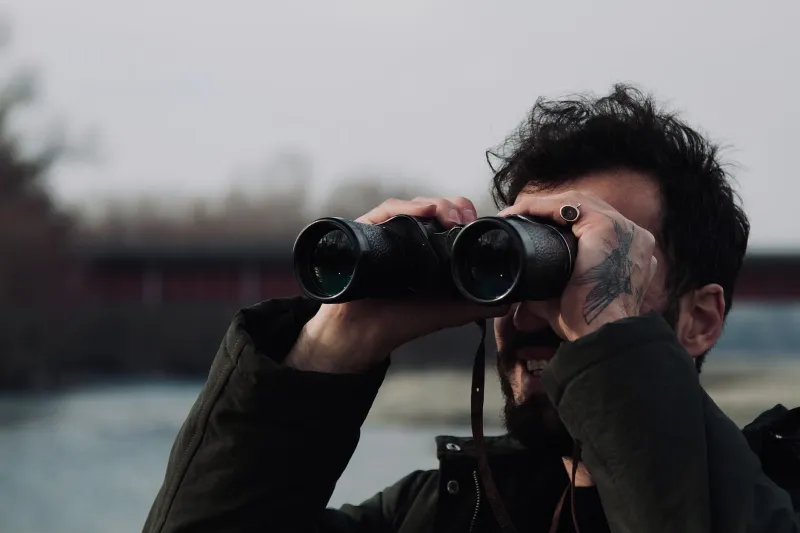
Let's set the scene. You're standing at the edge of a creek at dusk, binoculars fogged from your own excited breathing, when something large and feathery swoops low over the water. Your heart rate triples. Your thumbs fumble for your birding app. You are absolutely certain — with every fiber of your outdoor-enthusiast soul — that you have just witnessed a fish owl doing fish owl things.
You have not.
What you probably saw was a great blue heron, a barred owl with ambitions, or — and this has genuinely happened — a very large chicken that escaped from a nearby farm and wandered toward the water looking for a drink.
Welcome to the Great Fish Owl Impostor Problem, a phenomenon so widespread that wildlife rehabilitators across the country have developed a kind of fond, exhausted shorthand for it. At the Owl Moon Raptor Center in Maryland, staff reportedly keep a running tally. By late summer, the whiteboard in the break room lists every "fish owl" that turned out to be something else. It is a long list. It has subsections.
Why Everyone Thinks They've Found Something Rare
Here's the thing about human psychology and birdwatching: we desperately want to see something extraordinary. We drive two hours to a nature preserve, we buy the expensive waterproof boots, we download three separate apps and read half a field guide on the car ride over. We have invested. And so when a large bird appears near water and does something even mildly interesting, our brains sprint ahead of our eyes and start filling in details that confirm what we already want to believe.
This is not a character flaw. This is just how people work. But it does mean that fish owl sighting reports are, statistically speaking, a mixed bag of genuine encounters and enthusiastic misreadings.
According to volunteers at multiple wildlife centers contacted for this piece, the most common impostor species — the birds most frequently mistaken for fish owls — form a surprisingly consistent lineup, regardless of geography.
The Usual Suspects
The Great Blue Heron (Ardea herodias) This bird is the reigning champion of mistaken identity, and honestly, it has earned that crown. Great blue herons are enormous, ancient-looking, and deeply unbothered by human presence. They stand in shallow water like they own the watershed. They will stare you down with an expression that says I was here before roads. They are not owls. They are not even close to owls. And yet, at dusk, when the light does that golden-hour thing and someone spots a large silhouette crouching near a creek, the heron gets the call.
Key distinction: herons have long, S-curved necks and fly with a slow, prehistoric flap. Fish owls fly silently and have round faces. If it looks like a pterodactyl doing yoga, it's a heron.
The Barred Owl (Strix varia) This is the most understandable mix-up on the list. Barred owls are real owls, they live near water, and they occasionally eat fish when the opportunity presents itself. They're also extremely vocal and fairly large, which gives them a certain dramatic flair that encourages over-identification. The problem is that barred owls are common throughout the eastern United States — so common that experienced birders call them "the default owl" — and fish owls are considerably rarer and more specific in their habitat preferences.
If you saw an owl near water and you live east of the Mississippi, there is a very high probability you saw a barred owl having a perfectly ordinary Tuesday.
The Osprey (Pandion haliaetus) Ospreys are fish hunters. They dive feet-first into water, they carry fish in a distinctive aerodynamic grip, and they look absolutely magnificent doing it. They are also hawks, not owls, a distinction that feels obvious until you're watching one hover over a river at sixty feet and your brain just starts screaming fish owl fish owl fish owl.
The giveaway: ospreys are active during the day. If you saw a large bird dramatically catch a fish in broad daylight, congratulations — you witnessed an osprey. If it was dark, you're in different territory.
The Snowy Owl (Bubo scandiacus) Snowy owls make occasional winter appearances in the northern United States, and every single time one shows up, wildlife centers brace for impact. These birds are striking, white, and enormous, which means birders who spot them sometimes convince themselves they've found something even rarer. Snowy owls are not fish owls. They prefer open fields and tundra environments, not wooded waterways. If you're seeing a large white owl in January near a shopping center parking lot in Minnesota, that's a snowy owl, and it is already deeply unimpressed with you.
What Wildlife Centers Actually Receive
Staff at rehabilitation facilities have stories. Not all of them can be told in full here, but the highlights are instructive.
One center in the Pacific Northwest received a call from a man who had been watching what he described as a "massive, fish-eating night owl" from his back porch for three weeks. He had documented it extensively. He had forty-seven photographs. He had named it Gerald. Gerald was a great horned owl who had discovered the man's decorative backyard pond and was eating the koi. This is, technically, a form of fish-eating behavior. Gerald was not a fish owl.
Another center in Ohio received a bird that a well-meaning family had carefully boxed up and driven forty minutes to report as a rare sighting. The bird was a juvenile red-tailed hawk that had been sitting on a fence post near a retention pond. It was fine. It was annoyed. It was released immediately.
And then there is the aforementioned chicken incident, which occurred in rural Tennessee and which the wildlife center staff still bring up at conferences as a reminder that the birding public contains multitudes.
How to Actually Identify What You're Looking At
The good news is that confident bird identification is a learnable skill, and it does not require a biology degree or seventeen apps. It requires slowing down and looking at a few specific things.
First, check the face. Owls have flat, round facial discs. Herons have long beaks and no disc. If the face looks like a dinner plate with eyes, you're in owl territory.
Second, check the time. If it's midday and the bird is actively hunting, it's probably not an owl. Most owls are crepuscular or nocturnal.
Third, check the neck. Does it have one? Owls appear almost neckless because they rotate their heads rather than extending a neck. Herons and egrets have very visible, very long necks, even when tucked.
Fourth, and most importantly: sit with the uncertainty for a moment before you file the report. The rarest sighting you'll ever make is still the one you actually saw clearly and identified correctly.
The Silver Lining of Being Wrong
Here's what nobody tells you about misidentification: it's actually kind of great for wildlife conservation. The people who call wildlife centers convinced they've spotted something rare are, almost universally, people who are paying attention to their local ecosystems. They noticed a bird. They cared enough to investigate. They got it wrong this time, but they'll get it right eventually.
Every birder with a hundred correct IDs has a private collection of embarrassing misses. The osprey they called a bald eagle. The cormorant they logged as something vaguely exotic. The time they got genuinely excited about a plastic bag.
Gerald the koi-eating great horned owl, for his part, was never officially identified as a fish owl. But his documentation contributed to a neighborhood awareness of raptor activity that eventually led to a local habitat protection effort.
Not bad for a case of mistaken identity.
Get out there, get it wrong a few times, and keep looking. The waterways are full of extraordinary birds — even the ones that aren't fish owls.