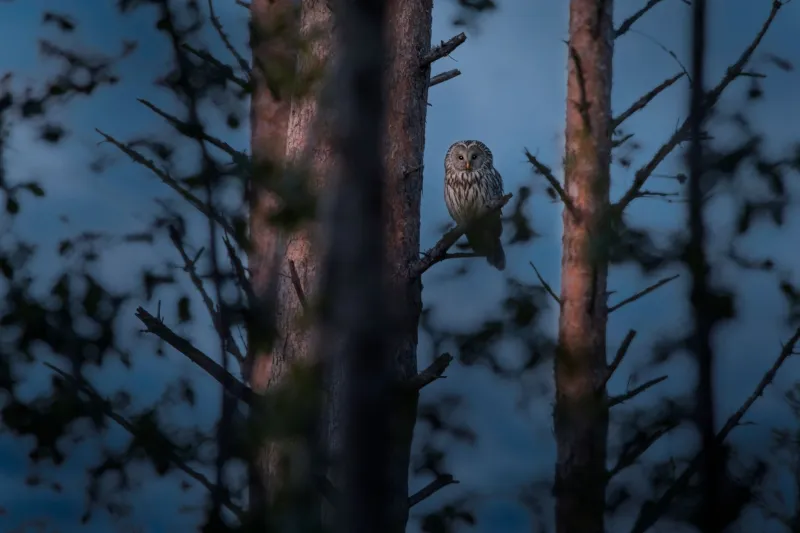
Surveillance State, Feathered Edition: How Backyard Birders Turned Their Owl Boxes Into Mission Control
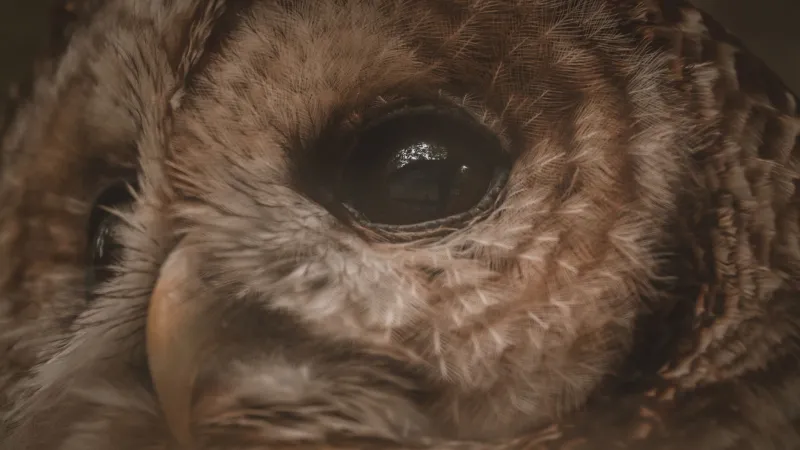
Somewhere in a quiet cul-de-sac in the Pacific Northwest, a retired electrical engineer named Dennis has not slept through the night in fourteen months. Not because of insomnia. Not because of a new baby. Because of Gerald.
Gerald is a Barred Owl who discovered Dennis's backyard fish pond in the autumn of 2022, and Dennis — armed with a background in circuit design and a frankly alarming amount of free time — decided that Gerald deserved to be documented with the kind of precision typically reserved for military satellites.
Dennis is not alone. Across the United States, a quiet but relentless technological escalation is unfolding in backyards, on fence posts, and along suburban creek banks. Fish owl enthusiasts, citizen scientists, and what can only be described as "extremely motivated hobbyists" are transforming their outdoor spaces into high-tech wildlife observation stations that would make a documentary film crew genuinely jealous.
The question is no longer whether you have an owl box. The question is how many terabytes of footage your owl box is generating per week.
From Lumber to LiDAR: The Hardware Evolution Nobody Predicted
Not long ago, putting up an owl box meant buying a kit at a garden center, hammering it to a tree, and hoping for the best. Maybe you'd get lucky. Maybe squirrels would move in and eat your sense of optimism. Either way, the setup cost about thirty bucks and involved zero software subscriptions.
That era is over.
Today's serious backyard raptor enthusiasts are deploying wildlife cameras with 4K resolution and infrared night vision, running them through AI-powered motion detection systems that can distinguish between an owl, a raccoon, and your neighbor's cat (the one that keeps getting blamed for everything). Some setups include thermal imaging sensors originally designed for home security that have been, shall we say, repurposed for ornithological surveillance. A growing number of enthusiasts have integrated their cameras with Raspberry Pi microcomputers running custom recognition scripts trained on thousands of owl images scraped from eBird databases.
One birder in suburban Ohio — who asked to remain anonymous because, and we quote, "my HOA doesn't technically know about the antenna" — has set up a mesh network across three adjacent properties to ensure seamless live-stream coverage of what he calls "the whole territory." His setup includes a dedicated NAS drive storing sixty days of continuous footage, automated cloud backups, and a Discord server with 847 followers who tune in for what he cheerfully describes as "prime time," which is roughly 2 to 4 a.m.
The Feuds Are Real, and They Are Spectacular
Here is something nobody tells you when you get into backyard wildlife observation: it is, at its core, a competitive sport.
The moment your neighbor installs a slightly better camera than yours, something primal awakens. Suddenly the angle of your mount matters. The field of view becomes a point of honor. Someone in your local birding Facebook group posts a crystal-clear slow-motion clip of an owl snatching a fish from a backyard pond, and before you know it you're reading reviews for a Sony mirrorless camera at midnight while eating cereal.
The territorial disputes aren't just psychological, either. In several documented cases — and yes, these cases are documented, because these people document everything — neighbors have gotten into genuine disagreements about camera placement, light pollution from IR emitters, and whether one person's motion-triggered spotlight is "disturbing the natural behavior" of the owls or simply "illuminating the truth."
A birding forum thread in a Colorado community ran to 340 replies after one member accused another of deliberately positioning a PTZ camera to capture footage from their owl box. The thread was eventually locked by a moderator who noted, with admirable restraint, that "perhaps we are losing perspective."
Perhaps.
What the AI Actually Sees (And What It Gets Hilariously Wrong)
The integration of machine learning into backyard wildlife monitoring is genuinely impressive — and genuinely unpredictable. Several popular AI recognition tools trained on bird image datasets can now identify owl species from a single frame with accuracy rates that researchers find legitimately useful. Cornell Lab of Ornithology has noted that citizen-generated data from automated camera traps is increasingly filling gaps in survey coverage that traditional field studies simply can't reach.
But the same systems have also confidently identified a plastic bag caught in a tree as a Snowy Owl, flagged a neighbor's decorative garden gnome as a potential Great Horned Owl on seventeen separate occasions, and — in one legendary case shared across multiple birding communities — sent an enthusiast a "rare sighting" alert at 3 a.m. for what turned out to be his own reflection in a newly installed window.
The raccoon misidentification rate, apparently, remains stubbornly high.
None of this has slowed anyone down. If anything, the errors have become part of the culture — screenshot-worthy moments shared in group chats with the kind of affectionate ridicule that only a community of deeply committed nerds can generate.
Why This Actually Matters (Beyond the Bragging Rights)
It would be easy to write all of this off as expensive hobbyism — grown adults playing wildlife spy with gadgets that cost more than a used car. And sure, some of it is exactly that, and that's fine, because life is short and owls are magnificent.
But there's something genuinely significant happening underneath the competitive camera mounting and the Discord notification pings.
The volume of behavioral data being passively collected by these backyard networks is staggering. Researchers studying fish owl habitat use, hunting patterns, and response to urban encroachment increasingly rely on long-term observational records that only citizen setups can provide. A professional field study might track a single bird for a season with significant funding and effort. Dennis and his thermal camera have fourteen months of continuous footage of Gerald, catalogued by date, time, temperature, and moon phase.
That is, objectively, a remarkable scientific resource — even if Dennis primarily uses it to show Gerald videos at family dinners.
Platforms like eBird and iNaturalist have long understood that the most powerful data collection tool in conservation isn't a government grant. It's a motivated person with a camera and a Wi-Fi connection. The current generation of backyard tech enthusiasts is simply taking that principle to its logical, somewhat unhinged extreme.
The Bottom Line: Your Backyard Is a Research Station Now
Whether you're a casual owl-watcher who just wants to know if anything interesting is happening near the creek behind your house, or you're the kind of person who has named your owl, catalogued its hunting schedule, and written custom Python scripts to auto-clip its best moments for YouTube — you're part of something bigger than a hobby.
You're part of a distributed, volunteer-powered wildlife monitoring network that is quietly becoming one of the most valuable conservation tools in the country.
Also, Dennis's footage of Gerald catching a twelve-inch trout in slow motion, backlit by a motion-triggered LED array, set to Fleetwood Mac, has 200,000 views on YouTube.
So there's that.
If you want to join the community, compare setups, or just watch two hundred people argue passionately about camera angles, Fish Owls is right here. We don't judge. We do, however, reserve the right to screenshot the AI misidentification alerts.